
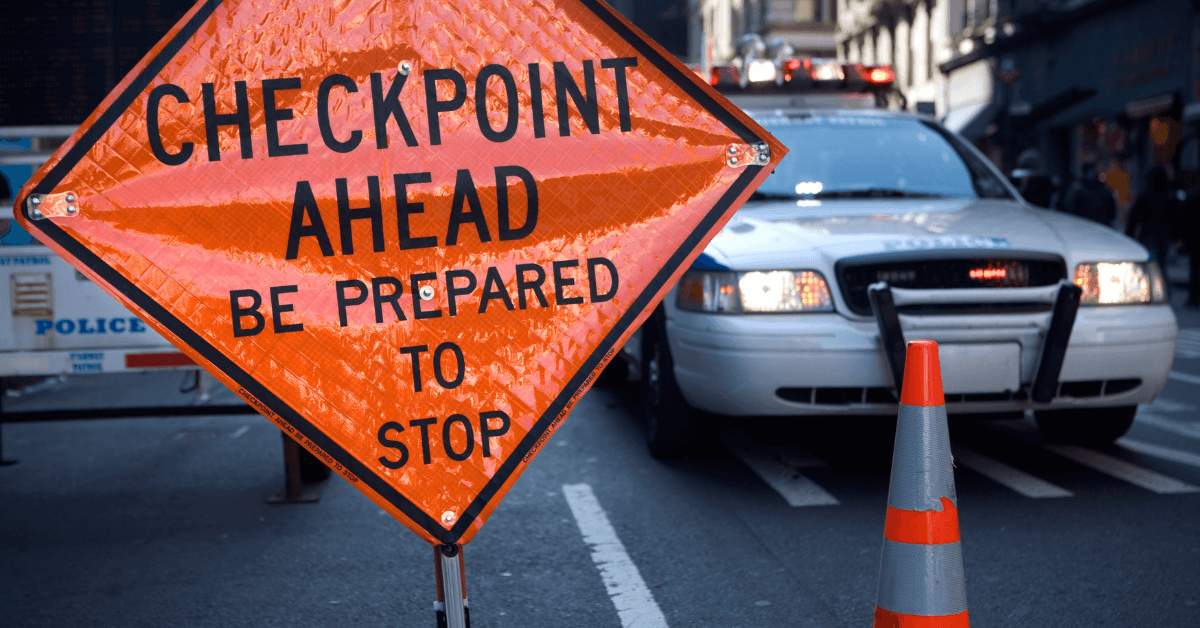
DWI checkpoints are legal in Missouri, but they are regulated and used selectively, especially during holiday weekends. These checkpoints must follow rules on public notice, neutral stopping patterns, and limited intrusion.
Drivers often ask whether DWI checkpoints are legal in Missouri—and what their rights are when they encounter one.
The short answer is yes, DWI checkpoints are legal in Missouri. But they are regulated, used selectively, and must follow specific rules under criminal law.
Understanding how checkpoints and related enforcement methods work can help drivers stay informed and avoid unnecessary complications.
Are DWI checkpoints legal in Missouri?
Yes. DWI checkpoints are legal in Missouri, though they are used less frequently than in some other states.
Courts allow checkpoints as a public safety measure, even though officers stop vehicles without individualized probable cause. The legal justification balances roadway safety against limited intrusion on drivers’ rights. Missouri follows this framework while requiring safeguards to prevent abuse.
Rules Missouri requires for DWI checkpoints
Missouri courts require checkpoints to follow clear guidelines. If these rules are not followed, legal challenges may arise.
Transparency and public notice
Law enforcement must provide advance notice that a checkpoint will occur. This often appears in local news releases or online announcements. The purpose is to avoid surprise enforcement and reduce arbitrary stops.
Neutral stopping patterns
Officers must use a predetermined, neutral method for stopping vehicles, such as stopping every car or every third car. Officers cannot randomly choose which drivers to stop.
Limited intrusion
Checkpoint stops must be brief unless officers observe signs that justify further investigation, such as odor of alcohol or slurred speech.
These rules exist to protect drivers while allowing enforcement aimed at impaired driving prevention.
“Wolfpacks” and saturation patrols in Missouri
While checkpoints are stationary, Missouri law enforcement also uses saturation patrols, sometimes called “wolfpacks.”
A wolfpack is a group of coordinated officers assigned to patrol specific areas or times with higher DWI activity. Unlike checkpoints:
- They are mobile
- They rely on observed traffic violations
- They do not stop drivers without cause
Wolfpacks allow officers to monitor broader areas and respond quickly when violations occur.
What to do if you encounter a DWI checkpoint or saturation patrol
1. Stay calm and follow instructions
Remain polite and follow directions. Officers are trained to observe behavior, speech, and physical signs during brief contact.
2. Know what you must provide
Drivers must provide:
- Driver’s license
- Proof of insurance
- Vehicle registration
You are not required to answer investigatory questions beyond basic identification.
3. Field sobriety tests vs. chemical tests
In Missouri:
- Field sobriety tests are voluntary
- Chemical tests fall under implied consent laws
Refusing a chemical test after lawful arrest can lead to a one-year license revocation, even if the criminal case is unresolved.
4. Avoiding checkpoints legally
You may turn away from a checkpoint if your maneuver is legal. Officers often watch for unsafe or illegal turns during these operations. Any traffic violation can be grounds for an independent stop.
Why these enforcement tools matter
DWI checkpoints and saturation patrols are designed to:
- Deter impaired driving
- Increase visibility of enforcement
- Reduce alcohol-related crashes
While some drivers criticize these tactics, Missouri courts continue to allow them within defined limits.
Key takeaway for Missouri drivers
DWI checkpoints are legal in Missouri, but they must follow strict rules. Saturation patrols operate differently and rely on observed violations. Knowing the difference and understanding your rights can help you navigate these encounters more confidently.
👉 If a checkpoint or patrol stop leads to a DWI charge, speaking with a lawyer experienced in Missouri DWI law can help clarify deadlines, license issues, and next steps. Scheduling a free consultation early often preserves more options.